
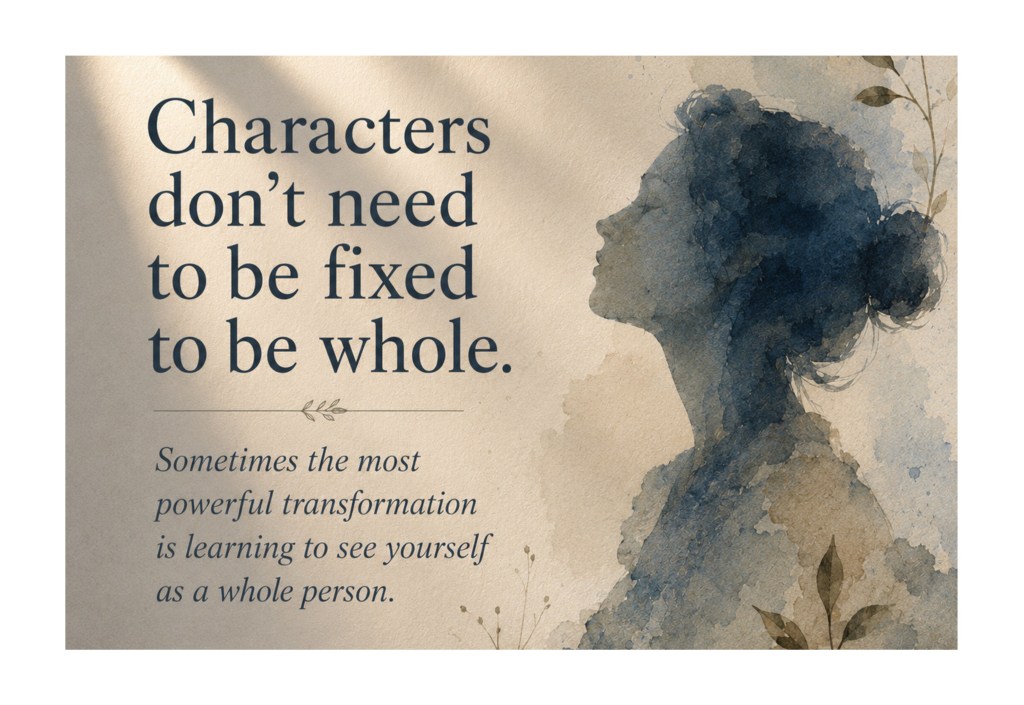
CHARACTERS DON’T NEED TO BE FIXED TO BE WHOLE
────── ⌘ ───────
I’ve been thinking about how fiction portrays mental illness and trauma, especially in stories where a relationship, a technology, or magic acts as a cure.
On the surface, the idea of miraculous healing can sound comforting. But when a story suggests that a character must become someone else before they can be whole, lovable, safe, or worthy of belonging, that premise slips into a deeply ableist message.
Mental illness and trauma are not moral stains. They can arise through complicated intersections of biology, environment, loss, and violence, and they can cause profound suffering. There’s nothing shameful about wanting relief.
But hope should not require erasure. Hope can look different.
Having lived with complex PTSD for two decades myself, I understand how horrible it can feel when society minimizes and sometimes demonizes mental illness. It hurts even more when fiction paints a character as monstrous or broken until they’re rescued by love, sex, or some mystical repair.
Mental health care is not one-size-fits-all. Progress can be slow and nonlinear. Treatment can include therapy, medication, and accommodations, alongside setbacks, grief, support, and the gradual rebuilding of trust. At its best, care can ease pain and help people understand what they need without demanding they sacrifice their identity.
As writers, we hold enormous power in how we frame mental illness and trauma. We should be careful not to reinforce harmful tropes that can perpetuate shame in readers who may fear they are unworthy of acceptance. Instead, we should strive to write with honesty and authenticity because the way readers view themselves and others matters.
So ask yourself:
Does magically curing a character’s trauma increase their agency, or remove it?
Does the story treat mental illness as inherently tragic?
Is the intervention intended to bring relief, or make the character more socially acceptable?
I prefer stories that give characters the dignity to explore their complexity and the space to form connections in whatever ways they can, without those choices being depicted as narrative failures.
This is the kind of story I want to write.
Sometimes the most powerful transformation is not that a character is “fixed.” It’s that they come to see themselves as a whole person, even while they’re learning to live within their own mind and body.
────── ⌘ ───────
────── ⌘ ───────
Connect with me on:
Bluesky, X, Booksie, Facebook& Instagram
***
🔥
© 2026 Joy Shaw. All rights reserved. Stories forged in fire.


Leave a Reply